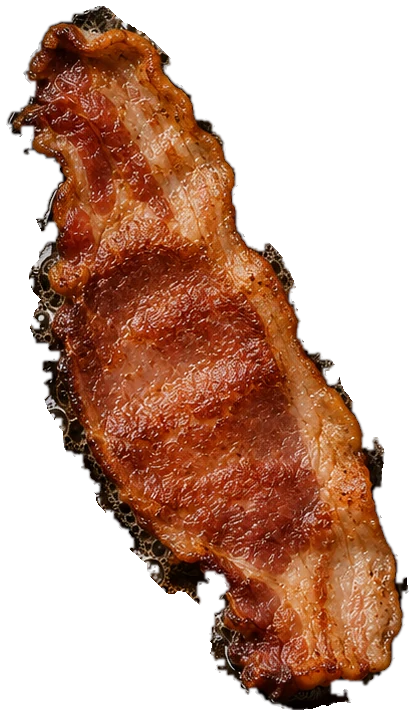
Walk down any supermarket aisle and most of the bacon you’ll see is wet-cured. That isn’t a bad thing in itself, but it does explain a lot about what happens in your pan.
Wet-cured
The pork is injected with, or soaked in, a brine of water, salt and curing salts. It’s fast, often ready in a day or two, and the water adds weight. In the UK, if more than 5% of the finished weight is added water, the name has to say “with added water”.
When you cook it, that water comes back out. The rasher shrinks, the pan fills with milky liquid, and the bacon steams rather than fries.
Dry-cured
The pork is rubbed with a dry mix of salt, a little sugar and curing salts, then left to rest in the chiller. Over several days the salt draws moisture out and works its way through the meat. It’s slower, takes more space, and the pork loses weight rather than gaining it.
The result is firmer, more concentrated bacon that sizzles straight away, browns well and crisps at the edges.
How to tell
- Read the label. “Dry-cured” is usually written on the front. Check the name for “with added water”.
- Look at the pack. Wet-cured bacon often has liquid pooled around the rashers.
- Watch the pan. White foam and a puddle mean added water.
Ours is dry-cured with no added water. Have a look at the range.