Why dry-cured
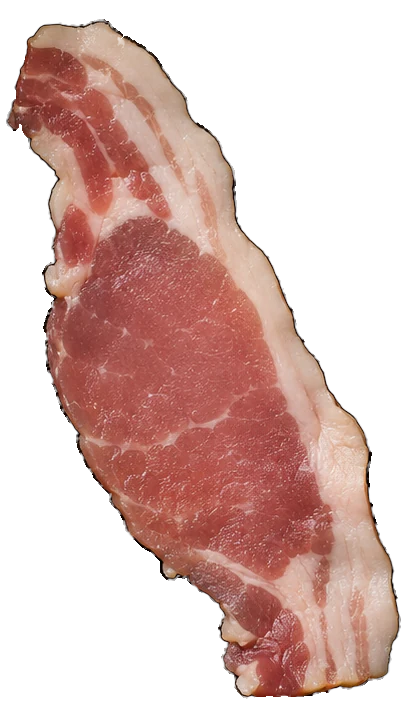
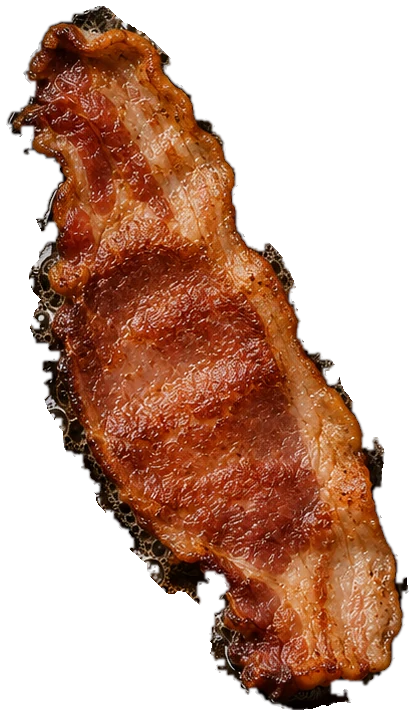
Same pig. Completely different rasher.
The difference between bacon that crisps and bacon that boils comes down to one thing: water. Here’s how we keep it out.
How we make it
- The rub. The pork is rubbed with a measured dry cure of salt and a little sugar. No brine, no injecting.
- The wait. It rests in the chiller for days, not hours while the cure works its way through.
- The smoke. Smoked bacon goes low and slow over real wood. Unsmoked stays pale and sweet.
- The slice. Sliced to a proper thickness, sealed and chilled straight away.
- The box. Packed cold with ice packs and sent on a tracked service, dispatched Monday to Wednesday.
What “no added water” means
Under UK labelling rules, bacon with more than 5% added water has to say so in its name, which is why you’ll see “with added water” on many supermarket packs. Ours has none added during curing, so what you buy is what ends up on your plate.
Back or streaky?
Back bacon comes from the loin, with a round eye of lean meat and a tail of fat. It’s the classic British rasher for a butty or a fry-up. Streaky comes from the belly, with alternating layers of fat and meat. It crisps beautifully and is brilliant for wrapping, crumbling and pancakes.
Why it costs a little more
Time and weight. Curing slowly takes up chiller space for days, and dry-cured pork loses water rather than gaining it, so you get less bacon per pig. We think you can taste the difference in the first bite.
Taste the difference.
Try a pack, or build a box with free delivery.